The neuroscience of hypnosis: how it helps your brain and body heal
Hypnosis is backed by neuroscience.
Accelerated Hypnotherapy isn’t just about imagining yourself on a calm beach. It’s applied neuroscience that changes how your brain and body respond to stress, pain, and trauma.
Hypnotherapy lights up your brain as if you were really there but it is so much more.
What is happening in your brain is what makes hypnosis such a powerful tool for healing.
Hypnosis activates specific brain regions and body systems that
- Calms your stress response
- Reduce pain
- Changes the way you think & feel
- Transforms the way you respond
- Creates lasting changes
Let’s break down what actually happens in your brain and body when you’re in hypnosis — and why it works so well for anxiety, trauma, and chronic conditions.
Hypnosis activates your body’s relaxation system
Research shows hypnosis turns on your parasympathetic nervous system — your “rest and digest” mode. This is the opposite of fight-or-flight.
Your heart rate slows down, your breathing deepens, and your muscles let go of tension.
Research shows that even before surgery, individuals who enter hypnosis experience higher parasympathetic activity, which predicts lower pain and greater comfort afterwards.
That’s why hypnosis is often used to prepare individuals for medical procedures, childbirth, or recovery from injury.
This shift isn’t just in your brain— it’s in your body, it’s physiological. Your body chemistry changes, flooding you with calm instead of cortisol.
Your brain waves shift into a healing state
Electroencephalogram (EEG) studies show that hypnosis is linked to an increase in theta brain waves — the slow, rhythmic waves your brain produces in states of deep relaxation and focused attention.
Theta waves are strongly connected to memory processing, emotional regulation, and creativity.
In hypnosis, this state allows you to access subconscious material in a safe way— which is why it’s so effective for trauma reprocessing, phobia treatment, and breaking habits.
Theta waves can help you discover creative solutions to problems and access new possibilities
Accelerated Hypnotherapy does not use traditional generic scripts to enable clients to be more responsive to hypnosis.
Hypnosis changes how your brain processes pain and emotion
When you imagine pain during hypnosis, the same brain networks activate as when pain is actually happening (Derbyshire et al., 2004).
But here’s the difference — because your prefrontal cortex stays engaged, you can reinterpret or reframe the pain signal, reducing your distress and intensity.
Functional MRI scans show that hypnosis quiets activity in the part of your brain that keeps you scanning the environment for threats, the dorsal anterior cingulate cortex (dACC).
At the same time, it strengthens the connection between the insula (body awareness) and dorsolateral prefrontal cortex (attention and working memory).
This means you become less focused on external distractions and more tuned into your internal state — a perfect setup for healing and self-directed change (Jiang et al., 2017).
This is why hypnosis feels different from normal relaxation — your brain literally shifts gears and is at work doing what it does best — heal itself.
Hypnosis helps you redirect attention and beliefs
In this state, you’re not unconscious — you’re highly focused.
Your critical, judgmental mind takes a backseat, which makes you more open to positive suggestions.
That’s why hypnosis is used successfully for:
- Anxiety and panic disorders
- Chronic pain and fibromyalgia
- IBS and gastrointestinal distress
- Depression
- Phobias and OCD
- Trauma and PTSD
- Substance use disorder
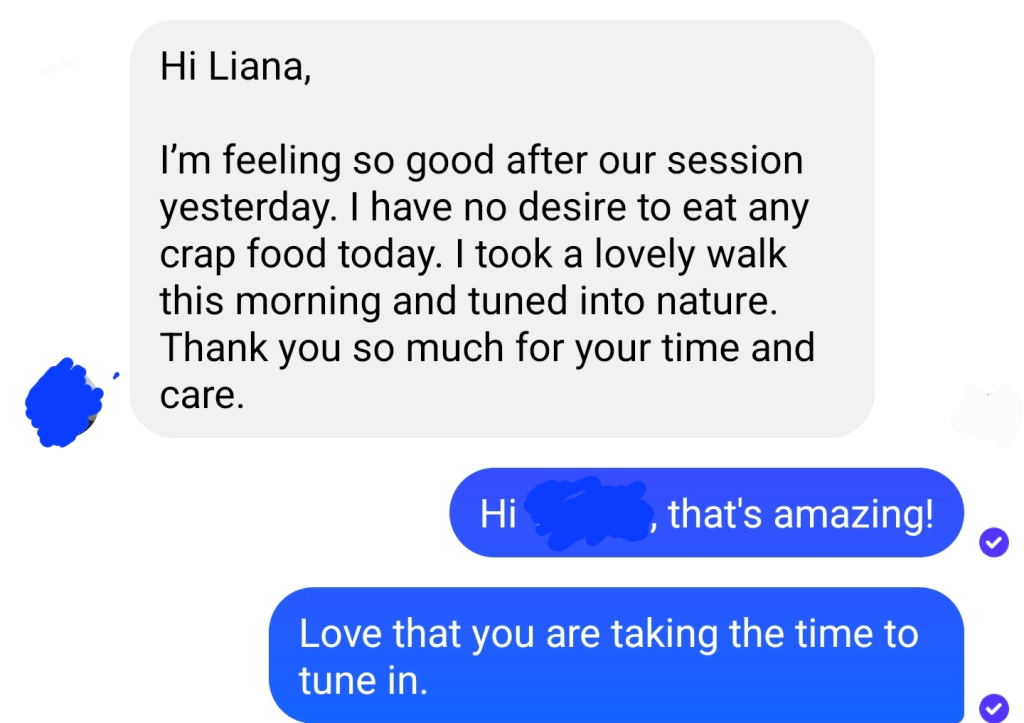
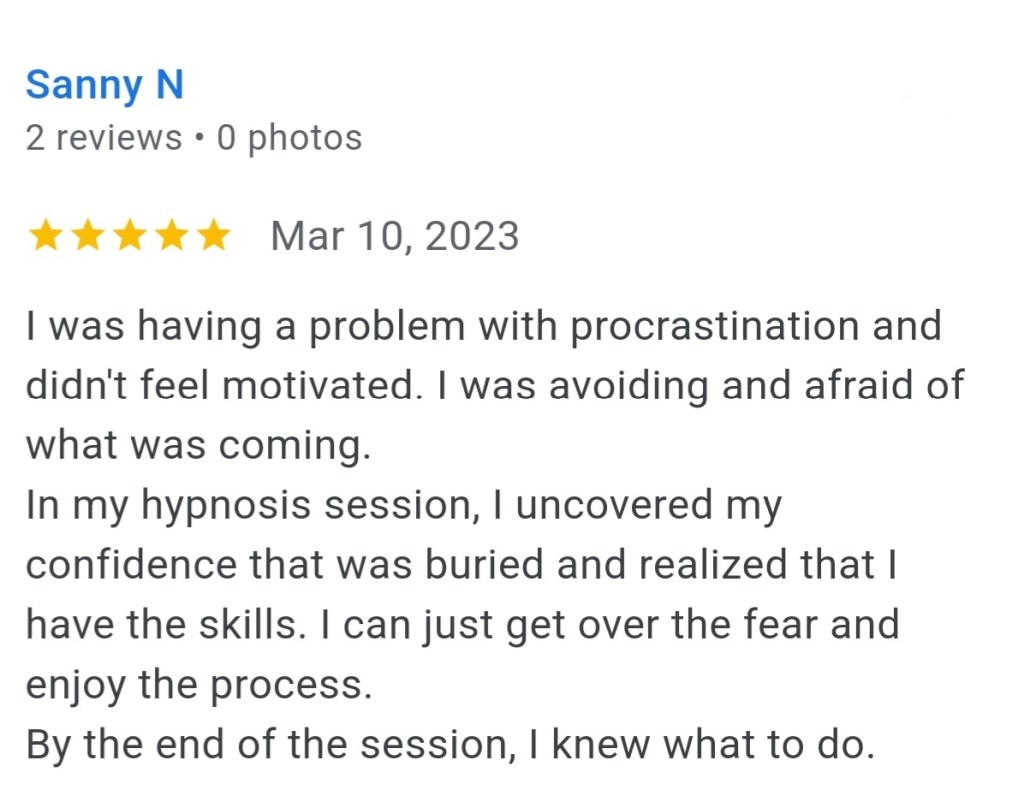
The ability to bypass the overactive fight-or-flight system allows new learning to take hold, which is why hypnosis can feel like flipping a switch — you respond differently, sometimes after a single session.
Creativity becomes a tool for change
Here’s where it gets fascinating — your creativity can be used to heal trauma.
It’s one of the brain’s most powerful levers for change.
Your brain strengthens the neural pathways for that new response.
Mental rehearsal has been shown to increase muscle strength, improve sports performance, and even change heart rate and blood pressure without physical movement.
Hypnosis amplifies this effect by quieting outside noise and letting you rehearse the change in a deeply focused state.
Why hypnosis works on trauma & anxiety
Brain imaging also shows hypnosis quiets the brain’s threat scanner (dACC) while strengthening connections between body awareness (insula) and focus (DLPFC).
You become less hijacked by triggers and more present — an ideal state for healing. Here’s how:
- Activity decreases in the part of the brain that helps monitor and regulate emotion, linking thought and feeling during stress or conflict — the dorsal anterior cingulate cortex (dACC), helping you tune out external distractions.
- The insula and DLPFC connect more strongly and overrides emotional impulses, which increases body awareness and focus to recover psychologically from trauma connect more strongly.
- Theta brain wave activity rises, associated with deep relaxation, memory processing, and emotional regulation.
You brain gets a break from fight or flight response, hypervigilance, and emotional triggers.
Why this matters for trauma and anxiety
For individuals living with trauma or anxiety, the emotional center (amygdala) is often overactive, keeping them stuck in hypervigilance.
Hypnosis helps calm this down, restoring balance to the nervous system.
Because you don’t have to relive the trauma in detail, Accelerated Hypnotherapy(and related techniques like the OEI Therapy and EMDR Flash Technique) make processing safer, more gentle and tolerable — especially for individuals who shut down or dissociate when talking about trauma.
Bottom line
You don’t have to remember to recover.
Hypnosis isn’t about losing control — it’s about restoring the brain and body.
By activating your relaxation system, increasing theta brain waves, and reshaping how your brain processes pain and emotion, hypnosis helps you create new patterns and possibilities for a life that works.
Whether you want to calm anxiety, process trauma, stop panic attacks, or break free from chronic pain, Accelerated Hypnotherapy work with your brain, not against it, like some therapies.
The research is clear: hypnosis is applied neuroscience.
Let’s connect.
Learn how subtle eye movements in OEI Therapy calm the nervous system without re-traumatizing you.
Listen, are you breathing just a little and calling it a life?
-MO























 Accelerated Hypnotherapy - Rapid Results